Vézénobres, Village Médiéval
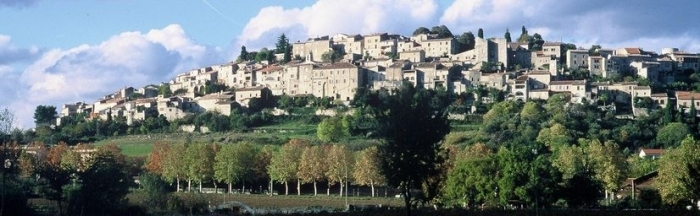
Spectaculaire, perché sur l'emplacement d'un ancien oppidum, Vézénobres est au carrefour des Cévennes et de la Provence. Ce site stratégique fut habité au fil du temps par des Ligures, des Celtes, des Volces et des Romains. En raison de cette situation privilégiée, les Romains initièrent une voie romaine qui prendra de l'ampleur au Moyen-Age et se transformera en un axe de pèlerinage et de commerce reliant le littoral méditerranéen à la France du nord : le Chemin de Régordane.
Vézénobres a connu une grande prospérité du XIème au XIIIème siècle en tant que ville-étape et relais commercial sur le chemin de Régordane. De cette époque, la cité a conservé un ensemble sans équivalent d'architecture civile de style roman. La fortune agricole des XVIII et XIXème siècles (sériciculture, viticulture) a également généré des demeures de qualité, inspirées des villes proches, ainsi que des mas fastueux en périphérie. Avec l'hôtel Renaissance et le château baroque édifiés au bas de la cité, Vézénobres s'impose comme le conservatoire patrimonial du piémont cévenol. Les façades de ses maisons, en belle pierre calcaire, sont des rébus à l'attention des apprentis architectes.
La Voie Régordane
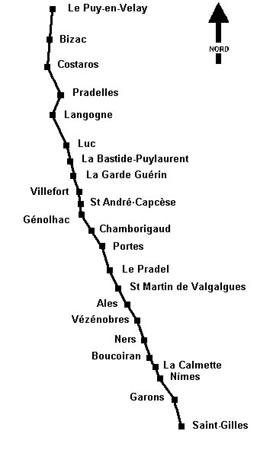
Voie millénaire de transhumance et d'échanges, bordée de « montjoie » (amoncellements de pierres servant de repères), de dolmens, d'inscriptions rupestres, route des Arvernes empruntée par César pour traverser les Cévennes, l'itinéraire, long de 240 km, relie le Puy-en-Velay à St Gilles du Gard.
Le chemin de Régordane est à la fois un chemin sacré ponctué de sites catholiques qui mène les pèlerins à St Jacques de Compostelle ; un chemin épique lieu de tous les combats qui ont marqué l'histoire de la région, ainsi qu'un chemin marchand utilisé par les muletiers porteurs de marchandises depuis le Languedoc jusqu'au Puy.
Cette voie, aux fonctions multiples par le passé, est encore d'actualité grâce à sa reconnaissance en itinéraire de Grande Randonnée (GR700).
Le verger-conservatoire
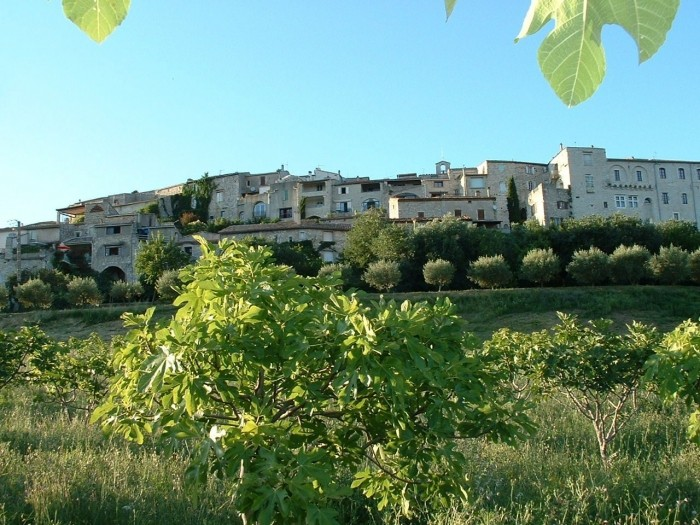
Vézénobres
fut célèbre pour sa production de figues sèches. Celles-ci étaient
vendues à l'automne lors de la foire de la Saint-André. Des efforts
récents ont permis de renouer avec cette tradition puisque le village
accueille aujourd'hui le verger-conservatoire du figuier :
un millier d'arbres représentant plus de 100 variétés différentes ont
été plantés en 2000, 2004 et 2006 sous l'égide du Conservatoire
Botanique National situé sur l'île de Porquerolles.
Cette culture de la figue est fêtée chaque année lors des Journées méditerranéennes de la figue qui ont lieu à la fin du mois d'octobre. Celles-ci situent Vézénobres au centre d'un réseau euro-méditerranéen axé sur la biodiversité et le développement durable.
Le château de Girard
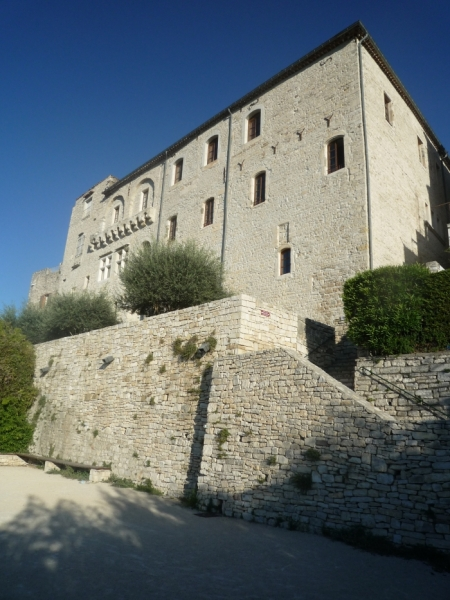
Construit par la famille de Girard au XIVème siècle, ce château était intégré aux fortifications urbaines, lesquelles furent durement mises à mal pendant les guerres de religion. Côté Sud, le château présente encore une imposante allure. Côté Nord, il apparaît en tant qu'Hôtel de Ville de Vézénobres car le marquis de Thoiras a vendu le château à la communauté au XVIIème siècle.
La Porte de Sabran
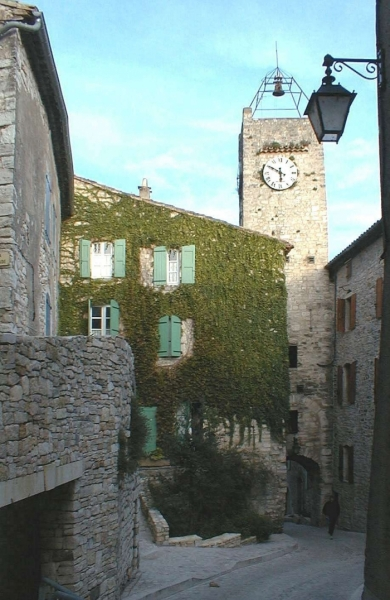
Des cinq portes fortifiées médiévales du village, seule la porte de Sabran subsiste, surmontée par la tour de l'horloge. On remarque son appareillage en « bossage » (aspect bombé de la pierre du fait de son travail au marteau)qui permet d'identifier sa construction au début du XIIIème siècle.
Au XVIIIème siècle, elle a été surmontée d'un clocher et de l'horloge. En descendant la rue de l'Horloge, une fois la porte franchie, on remarque l'amorce du mur des remparts et le chemin de ronde sur les hauteurs de la porte.
Cette porte doit son nom à la famille Sabran, l'une des plus illustres familles de Provence et du Languedoc qui trôna, dès le XIème siècle, sur le Duché d'Uzès et la baronnie de Sabran.
Le château de Bernis-Calvière
Charles-François de Calvière, officier de la Garde Royale, épousa en 1733 Françoise Olympe de Boucoiran, fille d'Alphonse de Calvière, seigneur de Vézénobres et de Boucoiran. Devenu marquis de Vézénobres et baron de Boucoiran, Charles-François décida de construire à Vézénobres un château (1740-1750) avec l'appui de l'architecte Guillaume Rollin d'Alès.
Apprécié de Louis XV, le marquis souhaita que ce château symbolise sa réussite. Pour ce faire, il s'inspira fortement du château de Versailles.
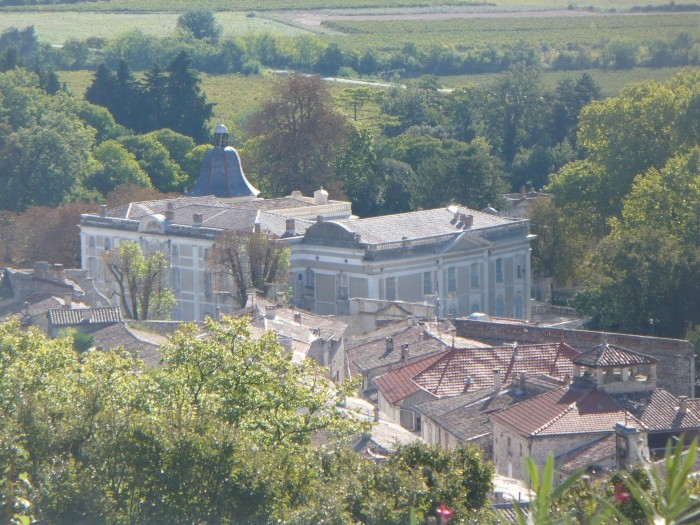
Le château appartient aujourd'hui à ses descendants, les Bernis de Calvière mais ne se visite pas.
Le château Fay-Peraut
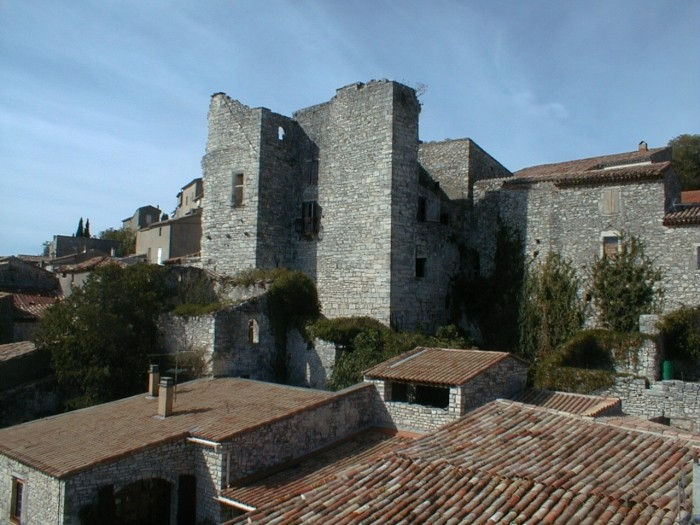
Château
médiéval construit au XIIème siècle, il fut agrandi et réhaussé dans le
style Renaissance au début du XVème siècle et il fut détruit le 15 Juin
1625. Le seul vestige du château est un pan de mur de trente mètres de
hau
L'Hôtel Montfaucon dit « Maison d'Adam et Eve »
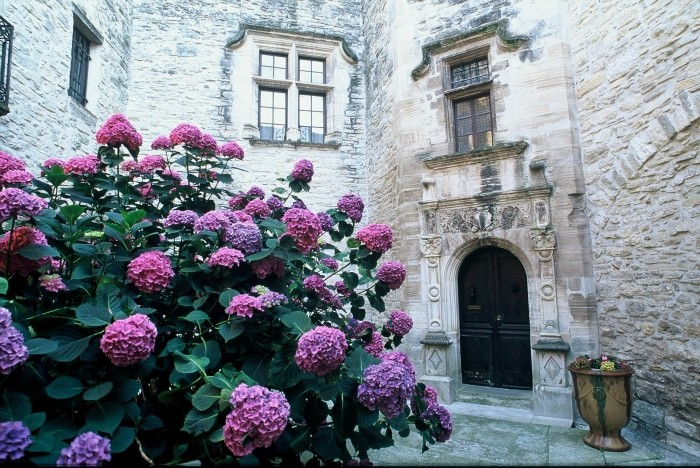
D'époque Renaissance, la construction de cet hôtel particulier a été décidée en 1547 par la baronne Françoise de Montfaucon.
Envie de découvrir tout ça ? Réservez votre séjour à L'Ostal Bestòrt !